
Pest Library · Iowa
Carpenter Ant
Camponotus pennsylvanicus
The largest ant in your Iowa home — and the one that chews structural wood.
- Size
- 1/4" – 5/8" (workers vary within the same colony)
- Color
- Solid black, sometimes red-and-black
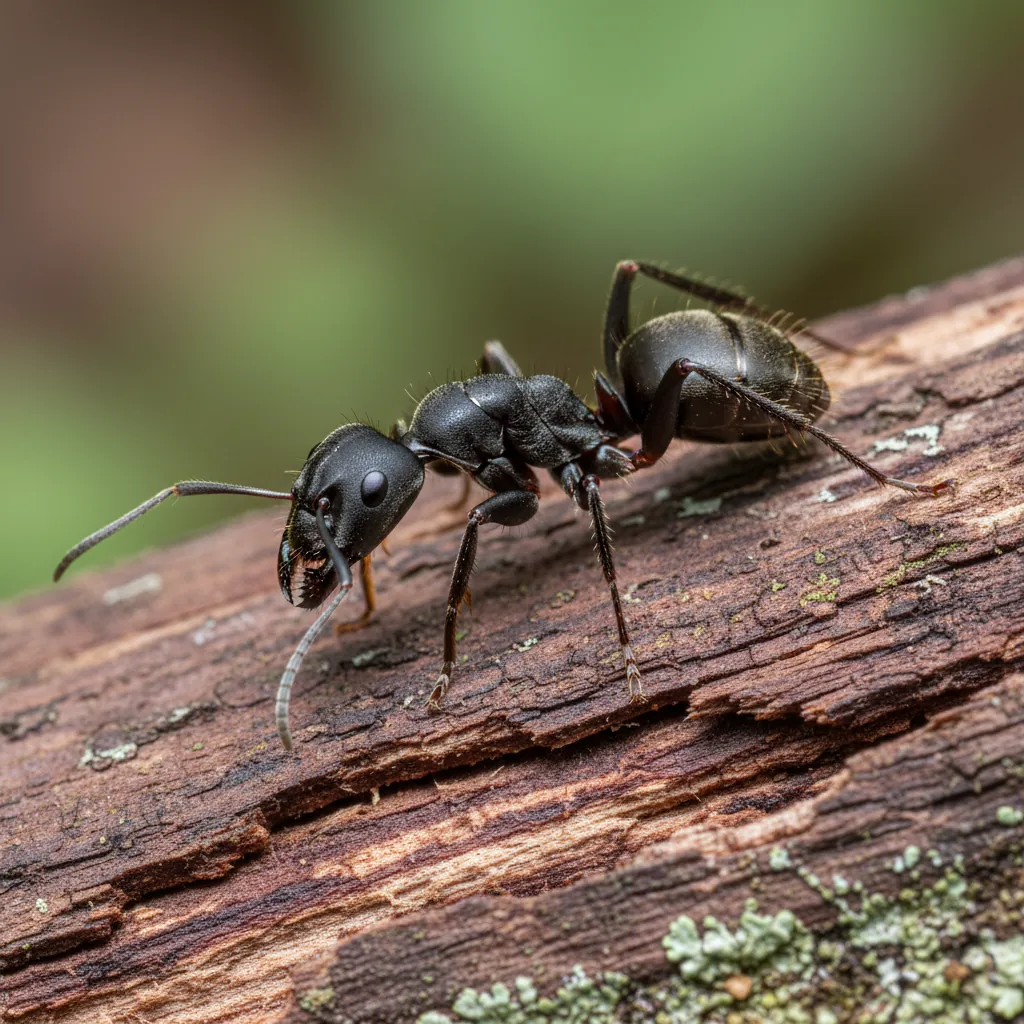
What it looks like
- Largest ant you'll see in an Iowa home — workers up to 5/8"
- Smoothly rounded thorax (no spines) when viewed from the side
- Single node ('waist') between thorax and abdomen
- Heart-shaped head on major workers
Where you'll find it
- Damp or previously water-damaged wood: window frames, door jambs, sill plates, deck ledger boards
- Tree stumps, firewood, and dead branches within 100 ft of the house
- Wall voids next to bathrooms, kitchens, and roof leaks
- Foam insulation behind siding
Behavior & biology
Carpenter ants don't eat wood — they excavate galleries inside it for nesting. A mature colony has 10,000–20,000 workers and may have multiple satellite nests. They forage at night, traveling up to 100 yards from the nest along trees, fences, and utility lines. Diet is sugars (honeydew from aphids), proteins (other insects), and grease.
Iowa activity calendar
Peak Iowa activity months
Carpenter ant swarms hit Iowa in late March and April — winged ants emerging indoors in spring is a strong sign of an active interior colony. Foraging peaks May–August. By October they retreat to the nest.
Signs of an infestation
- Large black ants indoors, especially at night
- Coarse sawdust-like 'frass' under window frames, baseboards, or in basements
- Faint rustling sound inside walls (a mature colony)
- Winged swarmers inside the house in spring
- Trails on tree trunks or along utility lines leading to the house
Health & property risk
Carpenter ants tunnel through structural lumber. Damage is slower than termites but still costly — sill plates, headers, and roof rafters with active galleries lose load-bearing capacity over years. Galleries are smooth and clean (unlike termite galleries which contain mud).
How we treat it
- 1
Locate parent + satellite nests
We trace foraging trails back to the nest using moisture readings and visual inspection — carpenter ants almost always nest in damp wood.
- 2
Direct nest treatment
We inject non-repellent dust or foam directly into galleries, sill plate voids, and wall cavities. This kills the queen and brood.
- 3
Perimeter + transfer bait
We treat the exterior perimeter and any visible foraging trails with non-repellent insecticide that workers carry back to satellite nests.
- 4
Moisture remediation guidance
We tell you which leaks, gutters, or grade issues are feeding the colony so the next one can't move in.
Why DIY usually fails
Hardware store ant sprays kill the foragers and miss the nest entirely — meanwhile the colony continues excavating wood. Boric acid baits are too slow for carpenter ants. The nest must be located and treated directly.
FAQ
Related pests
Ready to get rid of carpenter ant?
See our service & pricing page for carpenter ant.
See Carpenter Ant Service →See carpenter ant in your Iowa home?
Free quote, same-day service, no contracts.