
Pest Library · Iowa
Subterranean Termite
Reticulitermes flavipes
The hidden wood destroyer — Iowa's only termite species, but it's enough.
- Size
- Workers 1/8", swarmers 3/8" with wings
- Color
- Workers creamy white; swarmers dark brown to black
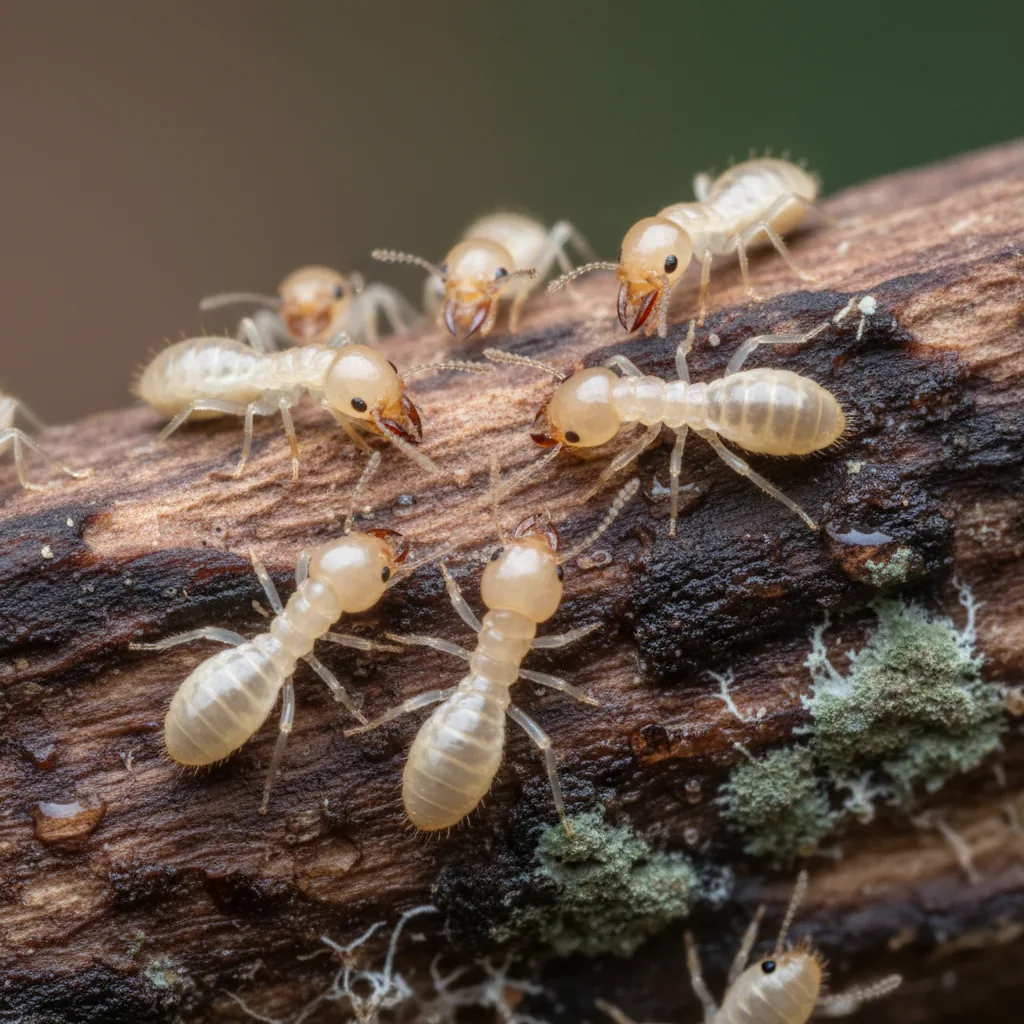
What it looks like
- Workers: small, soft-bodied, creamy white — almost never seen unless wood is broken open
- Soldiers: cream-colored body, large dark mandibles
- Swarmers: dark brown/black, ~3/8" with two pairs of equal-length wings (vs. ant swarmers which have unequal wings)
- Antennae are straight (ant antennae are bent/elbowed)
Where you'll find it
- Underground colonies in soil — they tunnel up into wood
- Sill plates, floor joists, sub-flooring, and wall studs
- Wood in contact with soil (deck posts, fence posts, porch supports)
- Mulch beds and woodpiles against the foundation
Behavior & biology
Subterranean termites live in underground colonies of 60,000 to over a million individuals. Workers tunnel up through soil and build mud tubes to access wood — they need contact with soil moisture and avoid open air. They eat cellulose continuously, weakening structural wood from the inside out. A mature colony eats roughly 5 grams of wood per day. Iowa colonies swarm in March, April, and May — winged reproductives emerge during warm humid days, often after rain.
Iowa activity calendar
Peak Iowa activity months
Iowa termite swarms hit late March through May — the best time to detect a hidden infestation. Foraging continues underground year-round, with peak feeding April through October.
Signs of an infestation
- Mud tubes (pencil-width, brown) running up foundation walls, piers, or basement walls
- Swarms of dark winged insects in spring, often near sun-warmed windows
- Discarded wings near windows and door frames after a swarm
- Wood that sounds hollow when tapped
- Buckling paint, sagging floors, or warped trim (advanced damage)
Health & property risk
Termites cause an estimated $5 billion in property damage annually in the US — more than fire and wind combined. Damage is hidden until it's severe. A colony left untreated for 5–8 years can compromise sill plates, floor joists, and wall studs to the point of major repair costs ($10,000+).
How we treat it
- 1
Comprehensive inspection
We inspect the entire foundation, basement, crawl space, and all wood in contact with soil. We look for mud tubes, frass, swarmer evidence, and damaged wood. Inspection includes a written report and treatment recommendation.
- 2
Liquid soil treatment OR baiting system
Two proven approaches. Liquid termiticide (Termidor or similar) creates a continuous barrier in the soil around and under the foundation — applied via trenching and drilling. Bait stations (Sentricon-type) installed every 10 ft around the perimeter — workers feed on the bait and carry it back to eliminate the colony over 6–18 months.
- 3
Annual monitoring
Termites are a long-game pest. Annual inspection catches new colonies before they cause meaningful damage.
- 4
Conducive conditions report
We document moisture issues, wood-soil contact, and other factors making your home termite-friendly, with prioritized fixes.
Why DIY usually fails
Termite control is not a DIY job. The chemicals are restricted-use, the application is technical, and missing a single section of foundation invalidates the protection. Sentricon-type bait systems require licensed installation and quarterly monitoring.
FAQ
Related pests
Ready to get rid of subterranean termite?
See our service & pricing page for subterranean termite.
See Subterranean Termite Service →See subterranean termite in your Iowa home?
Free quote, same-day service, no contracts.