
Pest Library · Iowa
Ticks
Ixodes & Dermacentor spp.
Iowa's two main ticks — deer tick (Lyme carrier) and American dog tick.
- Size
- Unfed 1/8"; engorged up to 1/2"
- Color
- Brown/black with variable patterning
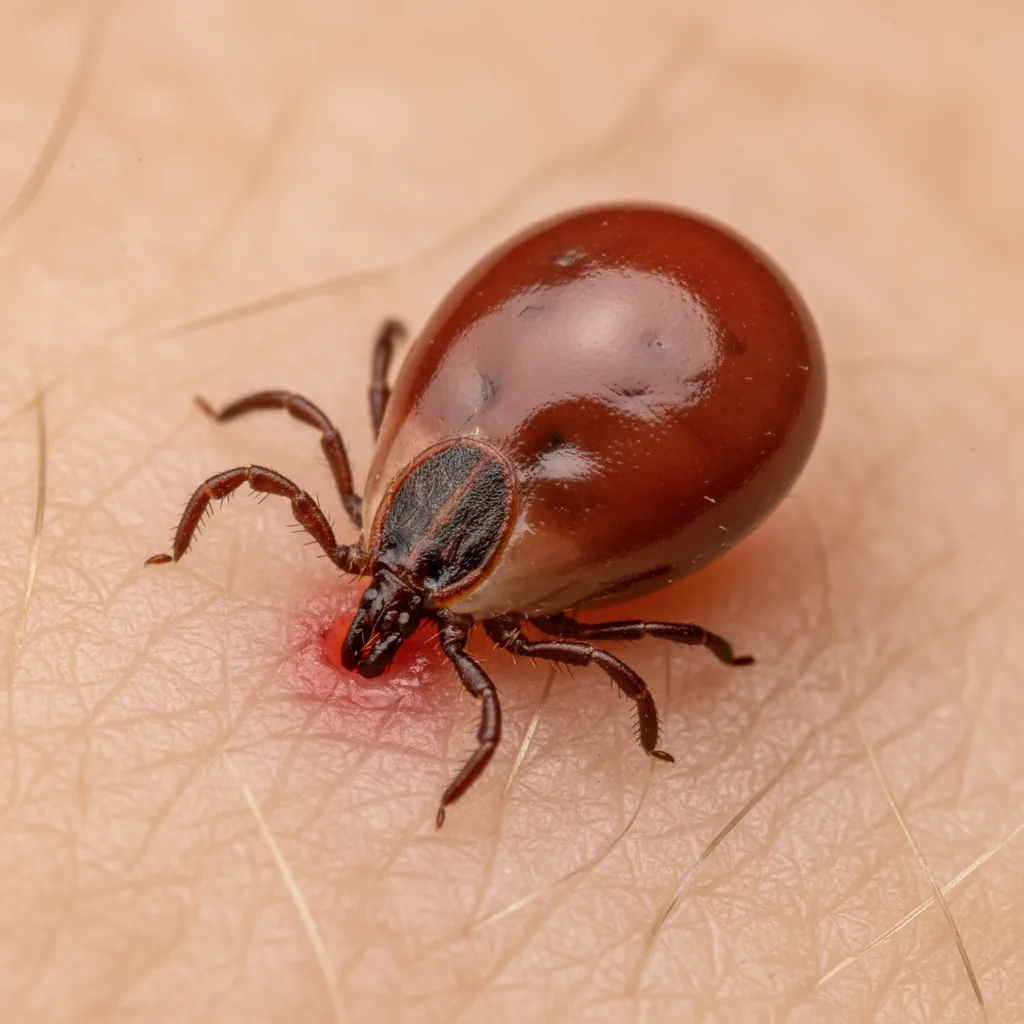
What it looks like
- Eight legs (adults) — they're arachnids, not insects
- Deer tick (blacklegged tick): tiny (poppy seed size unfed), reddish body with black scutum, primary Lyme disease vector in Iowa
- American dog tick: larger (1/8" unfed, 1/2" engorged), brown with white markings, vector for Rocky Mountain spotted fever
- Lone star tick: brown with single white spot on female's back, increasing in southern Iowa
Where you'll find it
- Tall grass, brush, and woodland edges
- Leaf litter and shaded yard borders
- Walking trails and wooded recreation areas
- Deer trails and where wildlife crosses through yards
Behavior & biology
Ticks have a 3-host life cycle (larva, nymph, adult — each stage feeds on a different animal). Iowa Lyme disease is spreading north and west; deer tick populations now established in most of central and eastern Iowa. Ticks find hosts by 'questing' — climbing tall grass and waiting for a passing animal. They cannot jump or fly.
Iowa activity calendar
Peak Iowa activity months
Iowa tick activity runs April through October with peak biting in May-July. Adult deer ticks active again in October-November as a second peak.
Signs of an infestation
- Ticks attached to pets after walks in tall grass or woods
- Ticks attached to humans after yard work or outdoor recreation
- Bull's-eye rash 3-30 days after a deer tick bite (Lyme indicator)
Health & property risk
Lyme disease, anaplasmosis, ehrlichiosis, and Rocky Mountain spotted fever. Iowa Lyme cases have increased steadily over the last decade. Prompt removal (within 24 hours) significantly reduces disease transmission risk.
How we treat it
- 1
Yard perimeter + tick zone treatment
We treat the 'tick zone' — woodland edges, tall grass borders, and shaded areas where ticks quest. A 3-foot mowed buffer between yard and woods further cuts populations.
- 2
Bait box program (where appropriate)
Tick-killing bait boxes target rodents that carry tick larvae and nymphs — interrupts the disease cycle at its source.
- 3
Recurring season program
Treatments every 6-8 weeks April through October maintain 80%+ population reduction in treated yards.
Why DIY usually fails
Mow grass short, remove leaf litter, create a 3-ft buffer between lawn and woods. Permethrin-treated clothing for high-risk activities. Always check pets and children after outdoor exposure.
FAQ
Related pests
See ticks in your Iowa home?
Free quote, same-day service, no contracts.