
Pest Library · Iowa
Mosquitoes
Culex pipiens & Aedes spp.
The reason you can't enjoy your Iowa backyard from June through September.
- Size
- 1/4" – 3/8"
- Color
- Gray-brown, often with banded legs
What it looks like
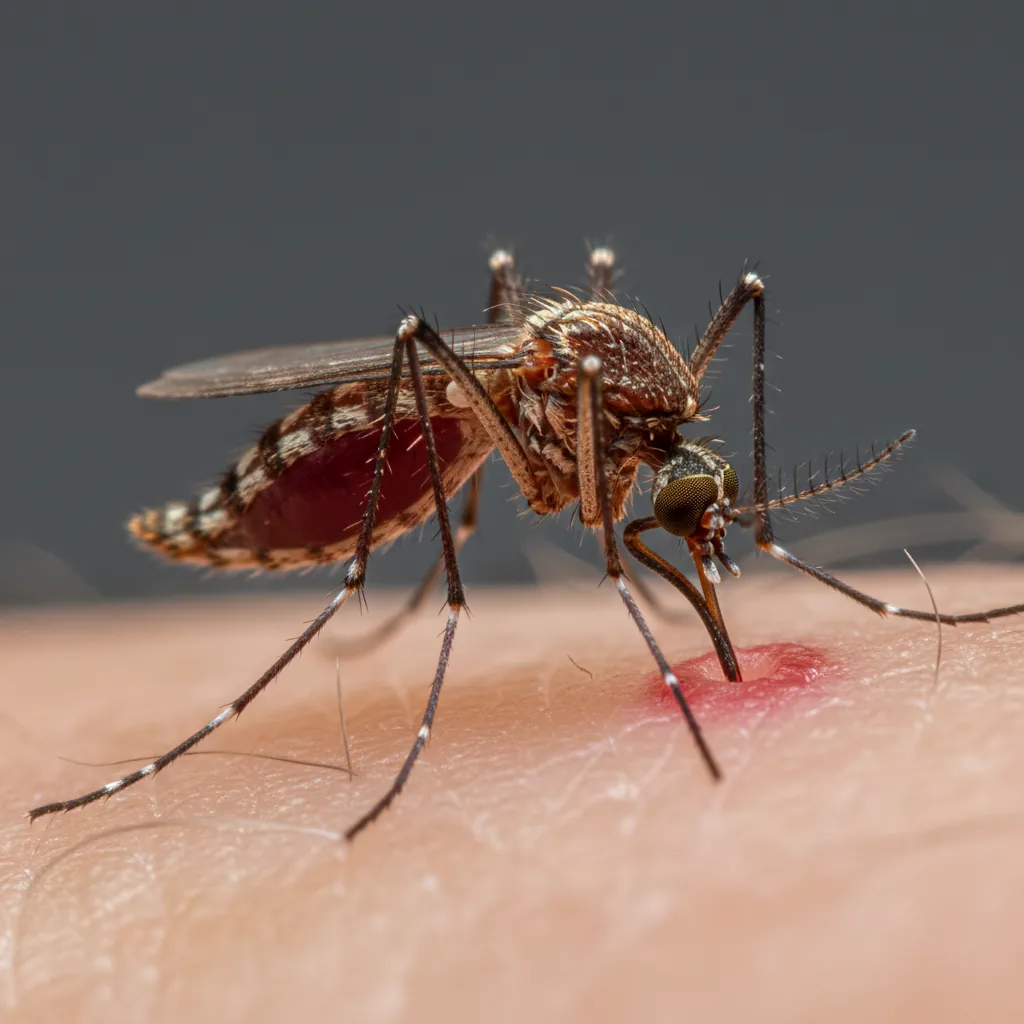
- Slender body, long legs, narrow wings
- Long piercing proboscis (only females bite)
- Iowa's main pests are Culex (West Nile carrier) and Aedes vexans (the aggressive 'floodwater mosquito')
Where you'll find it
- Standing water — even a bottle cap is enough for some species
- Bird baths, clogged gutters, and tarps holding rainwater
- Shaded shrubs and tall grass where adults rest during the day
- Tree holes, rain barrels, and corrugated drainpipes
Behavior & biology
Female mosquitoes need a blood meal to develop eggs. They locate hosts by CO2, body heat, and skin chemistry. Iowa's main species are Culex pipiens (active at dusk, primary West Nile vector), Aedes vexans (the aggressive 'floodwater' mosquito that explodes in numbers after rain), and Aedes albopictus (Asian tiger mosquito, day-biter, established in southern Iowa). Eggs hatch in standing water — eliminating standing water is the foundation of all mosquito control.
Iowa activity calendar
Peak Iowa activity months
Iowa mosquito season runs late May through October. Worst weeks are late June through August. Floodwater mosquito explosions follow heavy rain by 7–10 days.
Signs of an infestation
- Bites — that's the sign
- Larvae ('wrigglers') in standing water
- Adult mosquitoes resting on shaded undersides of leaves
Health & property risk
West Nile virus, La Crosse encephalitis, and (rarely in Iowa) Eastern equine encephalitis. Iowa averages 30–80 confirmed human West Nile cases per year. Bites cause itchy welts; severe allergic reactions are possible.
How we treat it
- 1
Source reduction walkthrough
We identify every standing water source on the property — gutters, plant saucers, tarps, kids' toys, corrugated drains. Eliminating these prevents 60-80% of next-generation mosquitoes.
- 2
Targeted barrier spray
We treat shaded foundation plantings, fence lines, deck undersides, and tall grass with a residual product where adult mosquitoes rest. Each treatment lasts ~21 days.
- 3
Larvicide for water that can't be drained
Bird baths, ornamental ponds, rain barrels: BTI (a biological larvicide) kills larvae without harming birds, fish, or pets.
- 4
Recurring monthly program
May through October monthly visits keep populations 80%+ below baseline. Most clients book a season package.
Why DIY usually fails
Citronella candles do almost nothing. Bug zappers kill mostly beneficial insects, not mosquitoes. The two DIY tactics that work: dump every container weekly, and treat tall grass / shrubs along your property's shaded edges.
FAQ
Ready to get rid of mosquitoes?
See our service & pricing page for mosquitoes.
See Mosquitoes Service →See mosquitoes in your Iowa home?
Free quote, same-day service, no contracts.