
Pest Library · Iowa
Fleas
Ctenocephalides felis
Tiny jumping blood feeders that bite ankles and infest carpet from a single pet.
- Size
- 1/16" – 1/8"
- Color
- Dark reddish-brown
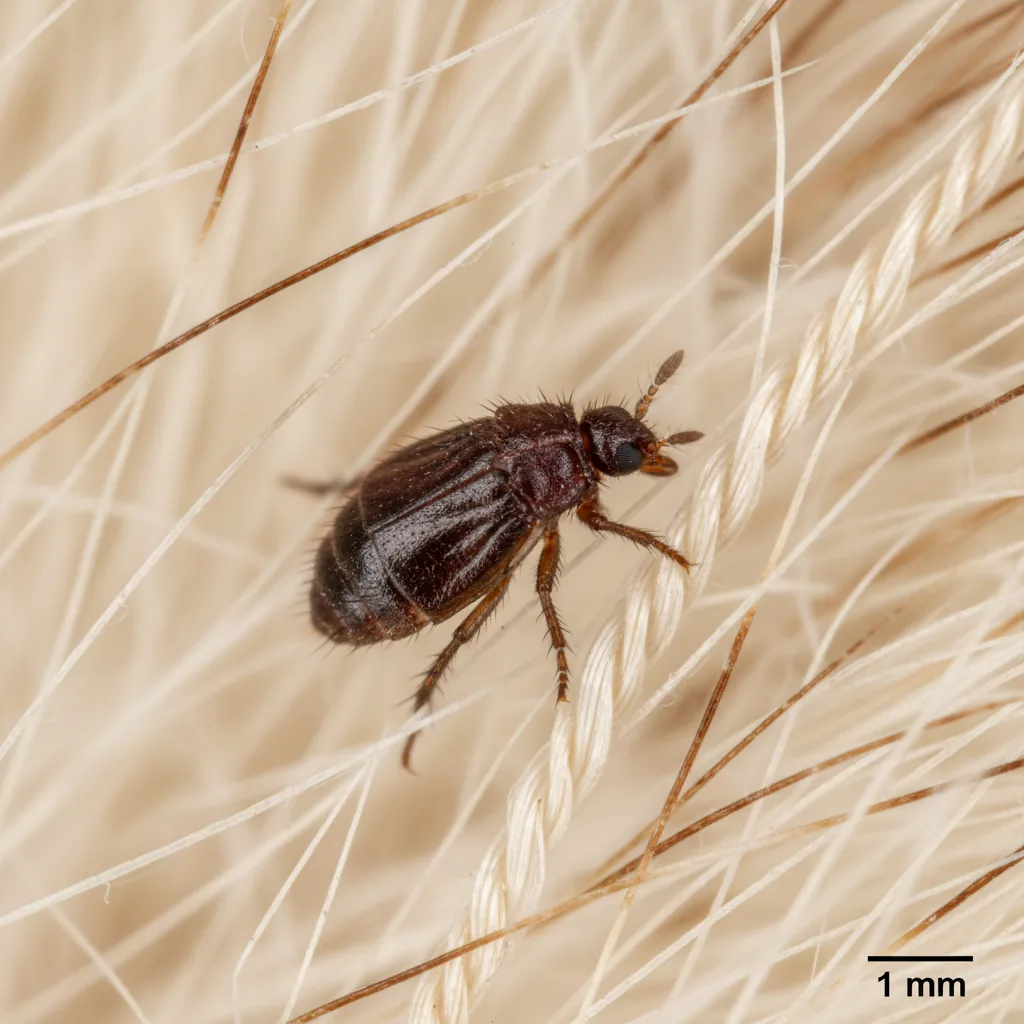
What it looks like
- Tiny (1/16-1/8"), flat side-to-side, dark reddish-brown
- No wings, but powerful jumpers (up to 12" vertically)
- Cat flea (Ctenocephalides felis) is the species behind almost all Iowa pet flea infestations — including on dogs
Where you'll find it
- On pets (dogs and cats)
- In carpet, rugs, and pet bedding
- Cracks in hardwood floors and along baseboards
- Outdoor: shaded yard areas where pets rest, plus wildlife runs (deer, raccoons)
Behavior & biology
A flea infestation is mostly NOT the visible adults — those are about 5% of the population. The other 95% is eggs, larvae, and pupae in carpet, pet bedding, and floor crevices. Eggs hatch in 1-12 days; larvae develop for 5-20 days; pupae can stay dormant for months waiting for vibration/CO2/heat to trigger emergence. This pupal reservoir is why flea problems seem to come back after treatment.
Iowa activity calendar
Peak Iowa activity months
Iowa flea pressure peaks July through October. Indoor populations on pets continue through winter in heated homes.
Signs of an infestation
- Itchy bites in clusters around ankles and lower legs
- Pets scratching, biting at hindquarters or tail base
- Small black 'flea dirt' (digested blood) in pet bedding and on light flooring
- Tiny jumping insects visible on light socks worn through the home
Health & property risk
Bites are itchy and can become infected from scratching. Fleas transmit tapeworms to pets. Some people develop severe flea bite allergy. Historically transmit plague (not a current Iowa concern).
How we treat it
- 1
Coordinated pet + home treatment
Treating the home without simultaneously treating the pet is wasted work — the pet immediately reseeds the home. We recommend an effective vet-approved product on every pet on the same day as our service.
- 2
Adulticide + IGR application
Whole-home treatment with a residual adulticide kills emerging adults; an Insect Growth Regulator (IGR) prevents larvae from maturing for up to 7 months.
- 3
Vacuum prep + post-treatment vacuum
We instruct on pre-treatment vacuuming (to lift eggs/larvae out of carpet) and ongoing daily vacuuming for 2 weeks (vibration triggers pupae to emerge into the residual).
- 4
Outdoor treatment when needed
If wildlife is reseeding pets in the yard, we treat shaded resting areas around the home.
Why DIY usually fails
Foggers do almost nothing for fleas — they don't penetrate carpet to reach the larvae. Vacuuming, pet treatment, and IGR is what works.
FAQ
See fleas in your Iowa home?
Free quote, same-day service, no contracts.