
Pest Library · Iowa
Bed Bugs
Cimex lectularius
Apple-seed-sized blood feeders that hide in seams and bite at night.
- Size
- 3/16" (about the size of an apple seed when fed)
- Color
- Reddish-brown when fed, lighter tan when unfed
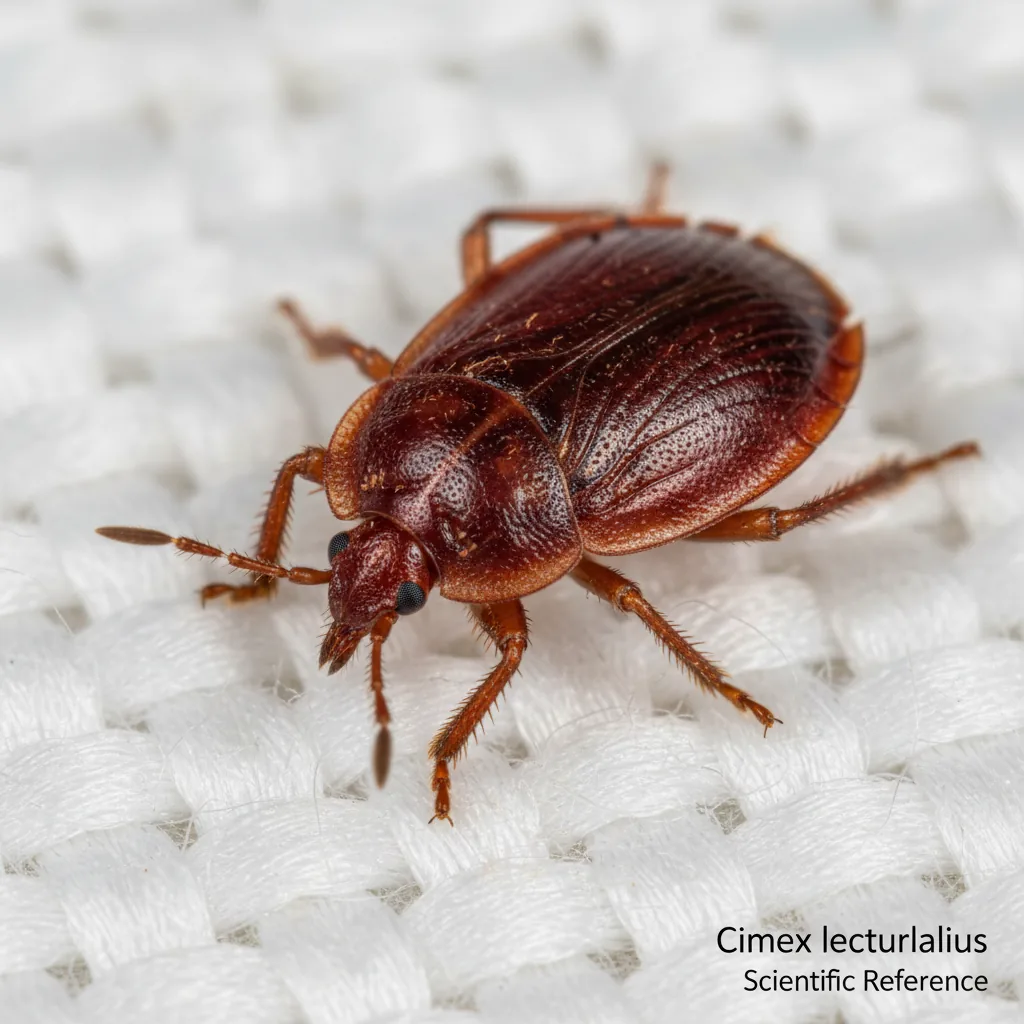
What it looks like
- Adults are flat, oval, reddish-brown, about the size of an apple seed
- Nymphs are smaller, lighter tan, and translucent before feeding
- Six legs, no wings, short antennae
- Eggs are tiny (1mm), white, and glued in cracks
Where you'll find it
- Seams and tufts of mattresses and box springs
- Behind headboards, inside bed frames, and in nightstand drawers
- Behind baseboards, inside electrical outlets near beds, and along carpet edges
- Couches, recliners, and any furniture used for sleeping
Behavior & biology
Bed bugs feed exclusively on blood, usually at night. They locate hosts by CO2 and body heat. A bed bug can survive 6–12 months without feeding, which is why infestations rarely die out on their own. Females lay 1–5 eggs per day, up to 500 in a lifetime. Bed bugs spread by hitchhiking — luggage, used furniture, clothing, and shared housing transitions are the main routes into Iowa homes.
Iowa activity calendar
Peak Iowa activity months
Year-round. Travel-related introductions spike in summer (vacation season) and December/January (holiday travel).
Signs of an infestation
- Itchy bites in lines or clusters on arms, neck, and back — but bites alone are not diagnostic
- Tiny dark spots (digested blood) on sheets, mattress seams, or behind the headboard
- Reddish smears where bugs were crushed
- Live bugs in mattress seams, behind baseboards, or in box spring corners
- Sweet, musty smell in heavy infestations
Health & property risk
Bed bugs do not transmit disease. Bites cause itchy welts in most people; some develop allergic reactions. The bigger toll is psychological — sleep loss, anxiety, and the stigma that comes with infestation.
How we treat it
- 1
Inspect + confirm every harborage
We confirm bed bugs (vs. fleas, mites, or other suspects) using interceptors, monitors, and a thorough room-by-room inspection of seams, frames, baseboards, and outlets — so nothing gets missed.
- 2
Targeted chemical treatment
We apply a multi-product chemical protocol — a residual adulticide, a contact knock-down, and an insect growth regulator (IGR) — to mattresses, box springs, frames, baseboards, outlets, and harborage cracks. Layered chemistry kills adults, nymphs, and stops eggs from maturing.
- 3
Mattress + box spring encasement
Bed-bug-rated encasements trap any survivors and prevent re-establishment.
- 4
Two follow-up visits
Bed bug eggs hatch in 6–10 days. We come back at 14 and 30 days to treat newly hatched nymphs and confirm elimination.
Why DIY usually fails
DIY bed bug treatment almost always fails. Bug bombs scatter them deeper into walls. 'Natural' sprays don't kill eggs. Throwing out the mattress without treating the rest of the room just gives the surviving bugs a new mattress to wait for.
FAQ
Related pests
See bed bugs in your Iowa home?
Free quote, same-day service, no contracts.