
Pest Library · Iowa
Spiders
The six spiders you'll actually see in Iowa — including the two that bite.
- Size
- Body length 1/8" – 1.5"
- Color
- Highly variable — see species pages
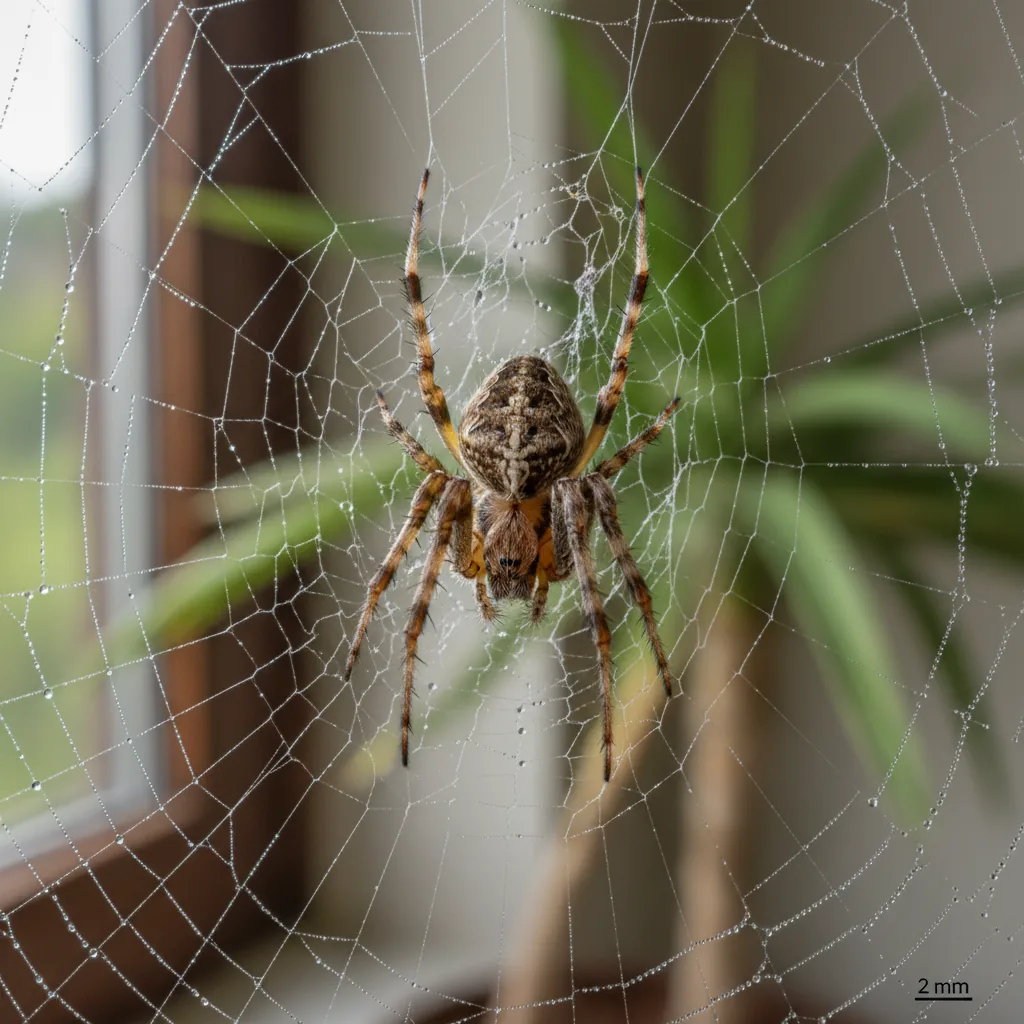
What it looks like
- Eight legs and two body segments (cephalothorax + abdomen) — separates spiders from insects
- No antennae and no wings
- Most house spiders are harmless — only brown recluse and (rare) black widow are medically significant in Iowa
- Webs vary by species: orb webs, funnel webs, cobwebs, or no web at all (wolf spiders hunt)
Where you'll find it
- Basements, crawl spaces, garages, and unfinished storage areas
- Window wells and exterior siding (especially behind shutters)
- Cluttered closets, cardboard boxes, and stored clothing
- Outdoor: woodpiles, rock walls, eaves, and foundation plantings
Behavior & biology
Spiders are predators — they eat other insects. A house with a lot of spiders usually has a lot of other bugs. Some species spin webs to catch prey; others (wolf, jumping, sac spiders) hunt actively. Most spiders bite only if pinched against skin, and most bites are no worse than a mosquito bite. Iowa has two spiders worth taking seriously: the brown recluse (well-established in southern Iowa) and the black widow (rare).
Iowa activity calendar
Peak Iowa activity months
Iowa spider sightings spike in late summer and early fall when adult males wander indoors looking for mates. Winter activity is mostly in basements and heated garages.
Signs of an infestation
- Webs in corners, around windows, and along ceilings
- Egg sacs (small white silk balls) in protected spots
- Shed skins ('exuviae') — spiders molt as they grow
- Sightings of the spiders themselves, especially at night
Health & property risk
Most Iowa spiders are harmless. Brown recluse bites can cause necrotic skin lesions in some people; black widow bites cause severe muscle pain. All other Iowa spider bites are similar to a bee sting at worst.
How we treat it
- 1
Identify what you have
We confirm species before treating — different spiders need different approaches.
- 2
De-web + perimeter spray
We physically de-web eaves, corners, soffits, and window frames, then apply a residual perimeter insecticide to kill the food source (other insects).
- 3
Reduce harborage
We point out clutter, gaps, and lighting that attracts insect prey — fixing these is what keeps spiders out long-term.
- 4
Brown recluse / widow protocol
If we ID brown recluse or widow we use targeted dust applications in voids, plus monitoring traps in key rooms.
Why DIY usually fails
Knockdown sprays kill the spider you see and ignore the population. Reducing other insect prey is what cuts the spider population — pure spider-only treatment without addressing prey is short-lived.
FAQ
Related pests
See spiders in your Iowa home?
Free quote, same-day service, no contracts.