
Pest Library · Iowa
Brown Recluse
Loxosceles reclusa
Iowa's only medically significant resident spider — common in older homes south of I-80.
- Size
- 1/4" – 1/2" body, ~1" leg span
- Color
- Uniform tan to dark brown
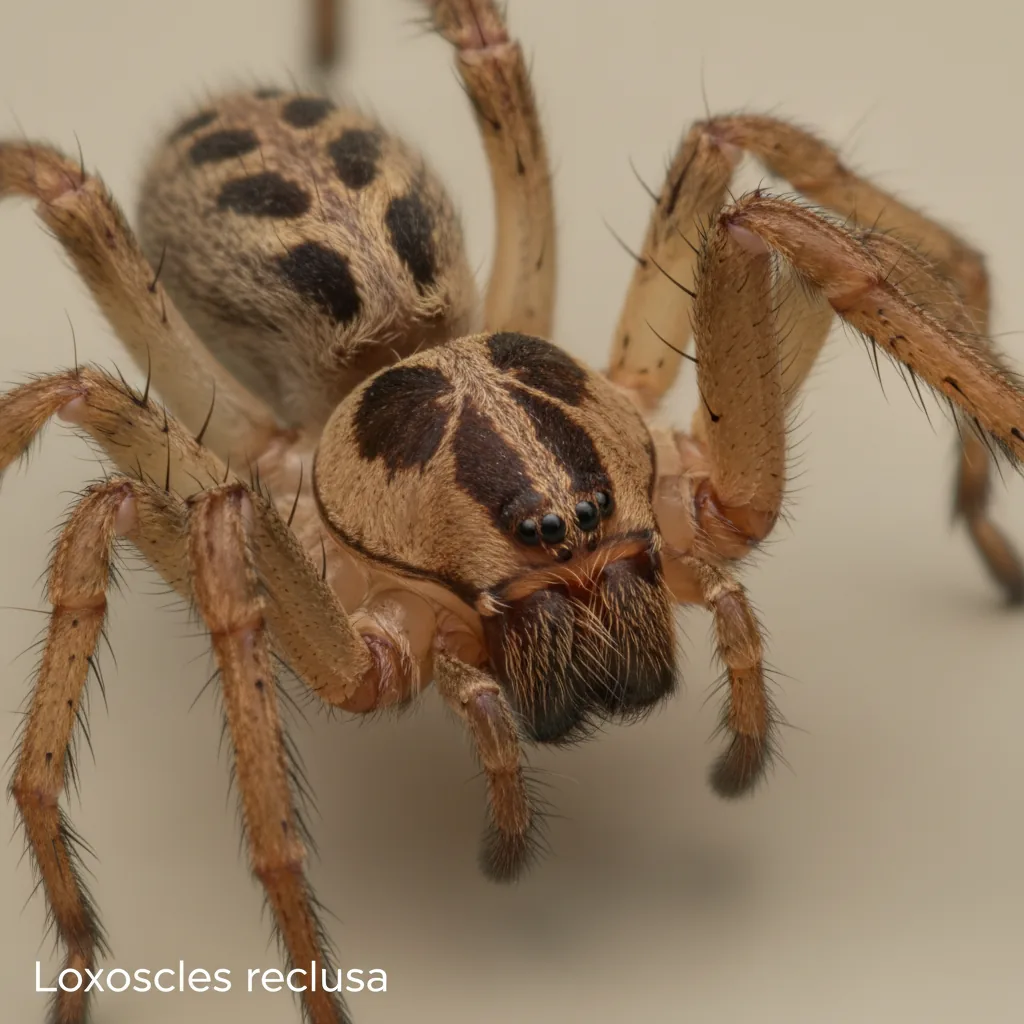
What it looks like
- Uniform tan/brown body — no banded legs, no patterns
- Six eyes arranged in three pairs (most spiders have eight)
- Dark violin-shaped marking on the back of the cephalothorax (the violin's 'neck' points toward the abdomen)
- Long, thin legs without spines
Where you'll find it
- Cardboard boxes, stored clothing, and shoes left undisturbed
- Behind picture frames, inside closets, under beds
- Attics, crawl spaces, basements, and unused bathrooms
- Bottom of stored linens, towels, and rarely-worn shoes (where most bites occur)
Behavior & biology
Brown recluse are reclusive ambush hunters — they don't build webs to catch prey, only loose silk retreats. Adults live 2–4 years and a single female can produce 150+ offspring. Established Iowa populations live in older homes, particularly in southern Iowa counties. Bites occur when the spider is pinched against skin — putting on a shoe, pulling on stored clothing, getting into bed.
Iowa activity calendar
Peak Iowa activity months
Active year-round indoors but most encounters happen March–November. Egg sac production peaks May–August.
Signs of an infestation
- Brown recluse spiders themselves (always the most reliable sign)
- Loose, irregular silk retreats in basement corners, under shelves, behind boxes
- Shed skins in storage areas
- Unexplained bites that develop a bullseye lesion
Health & property risk
Brown recluse venom contains a tissue-destroying enzyme. Most bites cause mild redness and heal without intervention; ~10% develop a necrotic ulcer that can take weeks to heal and may scar. Severe systemic reactions are rare but possible. Seek medical care for any suspected bite that develops a darkening center within 24–48 hours.
How we treat it
- 1
Sticky-trap survey
We deploy 20–40 monitoring traps across the home. This tells us where the population is concentrated and how heavy it is — essential before treating.
- 2
Targeted dust in voids
We apply long-residual insecticidal dust into wall voids, attic insulation, basement sill plates, and behind baseboards — the places brown recluse actually live.
- 3
De-clutter coaching
We tell you exactly what to bag up and how to store it (sealed plastic bins, off the floor) — this single step often cuts the population in half.
- 4
Re-inspect at 30 + 60 days
Brown recluse control is a 6–12 month process. We re-survey trap counts and re-treat as needed.
Why DIY usually fails
Surface sprays don't reach where brown recluse live. Bug bombs do almost nothing — the chemical doesn't penetrate voids. The only DIY step that matters is de-cluttering and storing items in sealed plastic bins.
FAQ
Related pests
Ready to get rid of brown recluse?
See our service & pricing page for brown recluse.
See Brown Recluse Service →See brown recluse in your Iowa home?
Free quote, same-day service, no contracts.