
Pest Library · Iowa
Odorous House Ant
Tapinoma sessile
Small brown ant that smells like rotten coconut when you crush one.
- Size
- 1/16" – 1/8" (about 2–3 mm)
- Color
- Brown to black, uniform
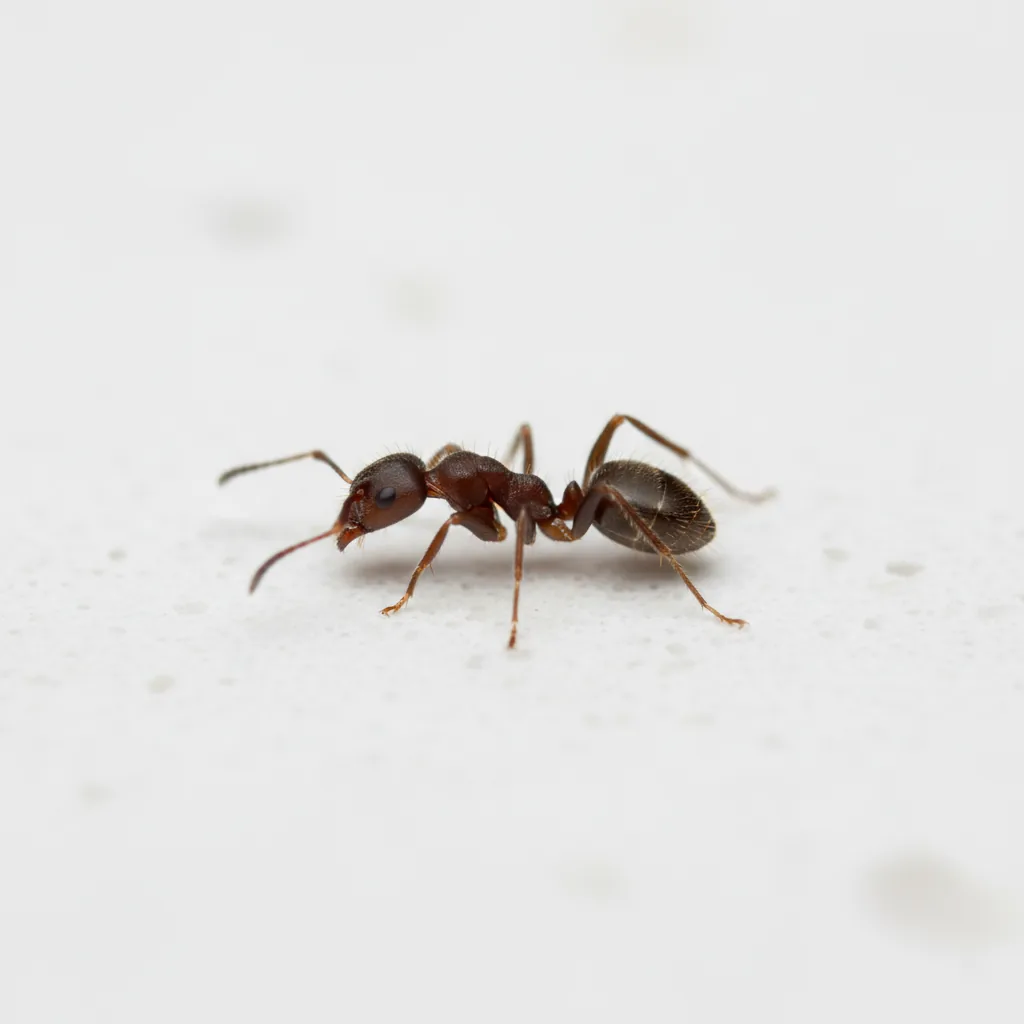
What it looks like
- Very small, dark brown to black, all workers the same size
- Single hidden node — abdomen overhangs the waist
- Crush one between your fingers — smells like rotten coconut or blue cheese
- Often confused with pavement ants but lacks the head grooves
Where you'll find it
- Wall voids near plumbing, water heaters, and dishwashers
- Behind baseboards, under sinks, and inside potted plants
- Outside under stones, mulch, and wood debris
- Anywhere warm and damp
Behavior & biology
Odorous house ant colonies are 'polygyne' — many queens, often spread across multiple satellite nests connected by trails. A single colony can have 100,000+ workers across dozens of nesting sites. Diet is mostly honeydew from aphids outdoors and sugar/grease indoors. They reproduce by 'budding' — a queen and a few workers split off to start a new nest, often triggered by stress (i.e. spraying them).
Iowa activity calendar
Peak Iowa activity months
Iowa odorous house ant pressure peaks in midsummer, with a sharp uptick during heavy rain when outdoor nests flood and ants move indoors. Fall sees a second surge as they look for warm overwintering sites.
Signs of an infestation
- Trails of tiny dark ants on counters, especially after rain
- Coconut-rot smell when you wipe up a trail
- Activity that returns within a week of spraying — and from new locations
- Ants in pet food bowls, around honey jars, in the dishwasher
Health & property risk
Not dangerous — no bite, no sting, no structural damage. But a budded colony can sprawl across a whole house, with new trails appearing in different rooms each week.
How we treat it
- 1
DO NOT spray repellents
First step is undoing damage. We assess where the colony has already budded — usually 4–6 satellite nests in walls and voids.
- 2
Sweet protein bait rotation
We deploy slow-acting baits that workers carry back across all satellite nests. We rotate sweet and protein baits because their preference shifts seasonally.
- 3
Non-repellent perimeter
Exterior treatment uses non-repellent product so the colony doesn't sense the threat and split further.
- 4
Monitor for 30 days
Odorous house ants take longer than other species — full elimination is usually 21–30 days. We re-treat free during this window.
Why DIY usually fails
Repellent sprays are the worst thing you can use on odorous house ants. They scatter the colony into multiple new nests inside your walls, turning a small problem into a house-wide one.
FAQ
Related pests
Ready to get rid of odorous house ant?
See our service & pricing page for odorous house ant.
See Odorous House Ant Service →See odorous house ant in your Iowa home?
Free quote, same-day service, no contracts.