
Pest Library · Iowa
Norway Rat
Rattus norvegicus
Large burrowing rat found near rivers, dumpsters, and older Iowa neighborhoods.
- Size
- 7" – 10" body, 6" – 8" tail
- Color
- Brown or gray, pale belly
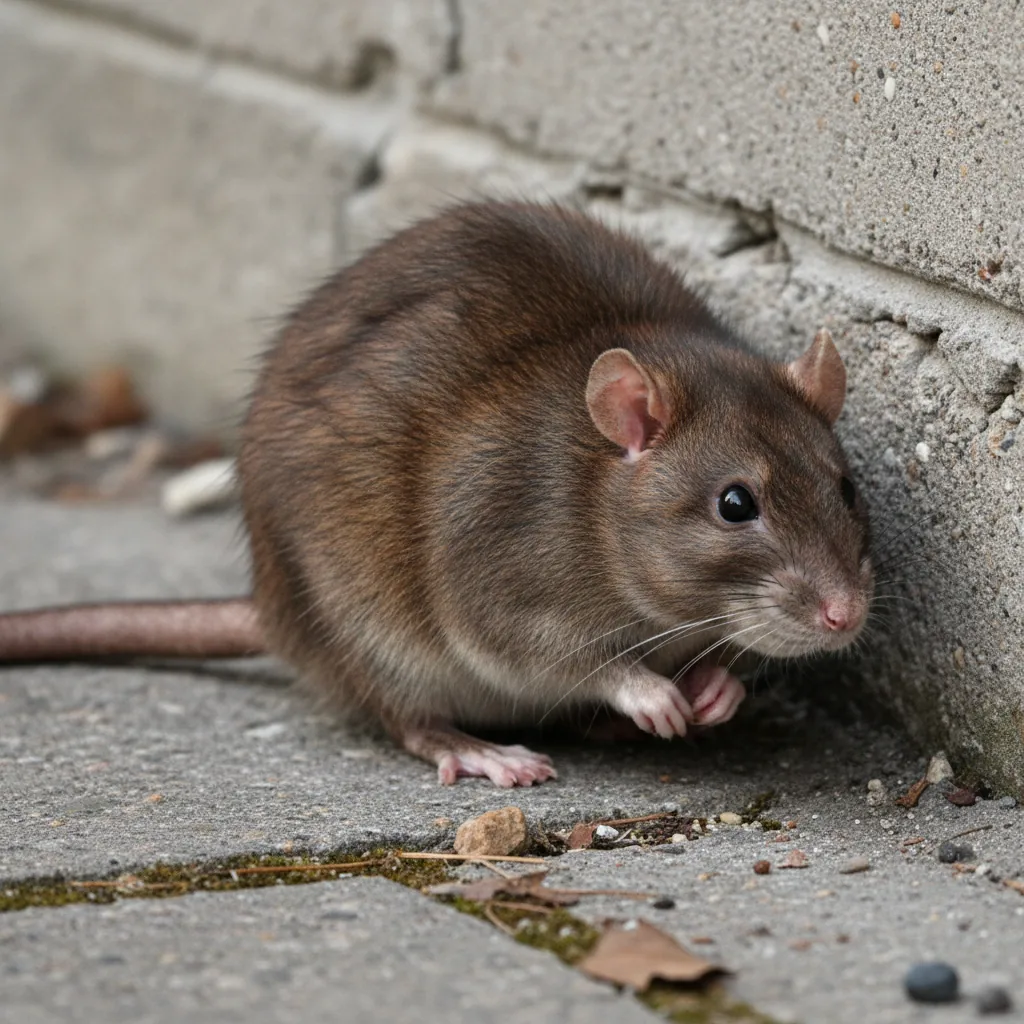
What it looks like
- Large, heavy-bodied (7-10" not counting tail)
- Blunt nose, small ears relative to head
- Tail shorter than body, thick and dark
- Brown to gray fur, pale belly
Where you'll find it
- Burrows in soil along foundations, near garbage areas, and along waterways
- Sewer systems and storm drains
- Dumpsters and trash collection areas
- Basements, crawl spaces, and ground-floor rooms (rarely climb to upper floors)
Behavior & biology
Norway rats are ground-dwelling burrowers. They live in colonies of 20–60 individuals organized around a dominant male and female. A female produces 4–7 litters per year, 6–12 young per litter — a colony can reach 200+ individuals in a season. They prefer protein and fat (garbage, pet food) over grains. They navigate by touch along walls and in burrows. Norway rats commonly nest near water and travel established routes nightly.
Iowa activity calendar
Peak Iowa activity months
Active year-round. Visible activity peaks fall through early spring as outdoor populations push toward food sources and shelter.
Signs of an infestation
- Burrow openings (2-4" diameter) in soil along foundations or near trash
- Greasy rub marks along walls about 6" off the floor
- Large droppings (3/4" long, capsule-shaped, blunt ends)
- Gnaw marks on pet food bins, electrical conduit, and door bottoms
- Rat sightings near dumpsters at dusk
Health & property risk
Norway rats carry leptospirosis, salmonella, and (historically) plague-related pathogens. They cause structural damage gnawing through wood, drywall, and electrical insulation — fire risk is real. They contaminate stored food in commercial settings and cause major losses in restaurants and grain operations.
How we treat it
- 1
Burrow inspection + mapping
We locate every active burrow on the property — old burrows look identical but inactive ones don't need treatment.
- 2
Snap traps + tamper-resistant bait stations
Heavy-duty rat snap traps inside protected enclosures, plus tamper-resistant exterior bait stations along travel routes.
- 3
Burrow baiting
Direct burrow baiting with restricted-use product accelerates colony collapse — only available to licensed applicators.
- 4
Exclusion + sanitation
Sealing gaps over 1/2", removing harborage (clutter, woodpiles, overgrown vegetation), and addressing the food source (dumpsters, pet food) breaks the cycle.
Why DIY usually fails
Snap traps work for individual rats but rarely break a colony. Most over-the-counter rat poisons are too weak for a serious infestation. Commercial-grade bait + tamper-resistant stations are the standard.
FAQ
Related pests
Ready to get rid of norway rat?
See our service & pricing page for norway rat.
See Norway Rat Service →See norway rat in your Iowa home?
Free quote, same-day service, no contracts.