
Pest Library · Iowa
House Mouse
Mus musculus
The most common indoor rodent in Iowa — fits through a hole the size of a dime.
- Size
- 2.5" – 3.75" body, 3" – 4" tail
- Color
- Dusty gray to light brown, lighter belly
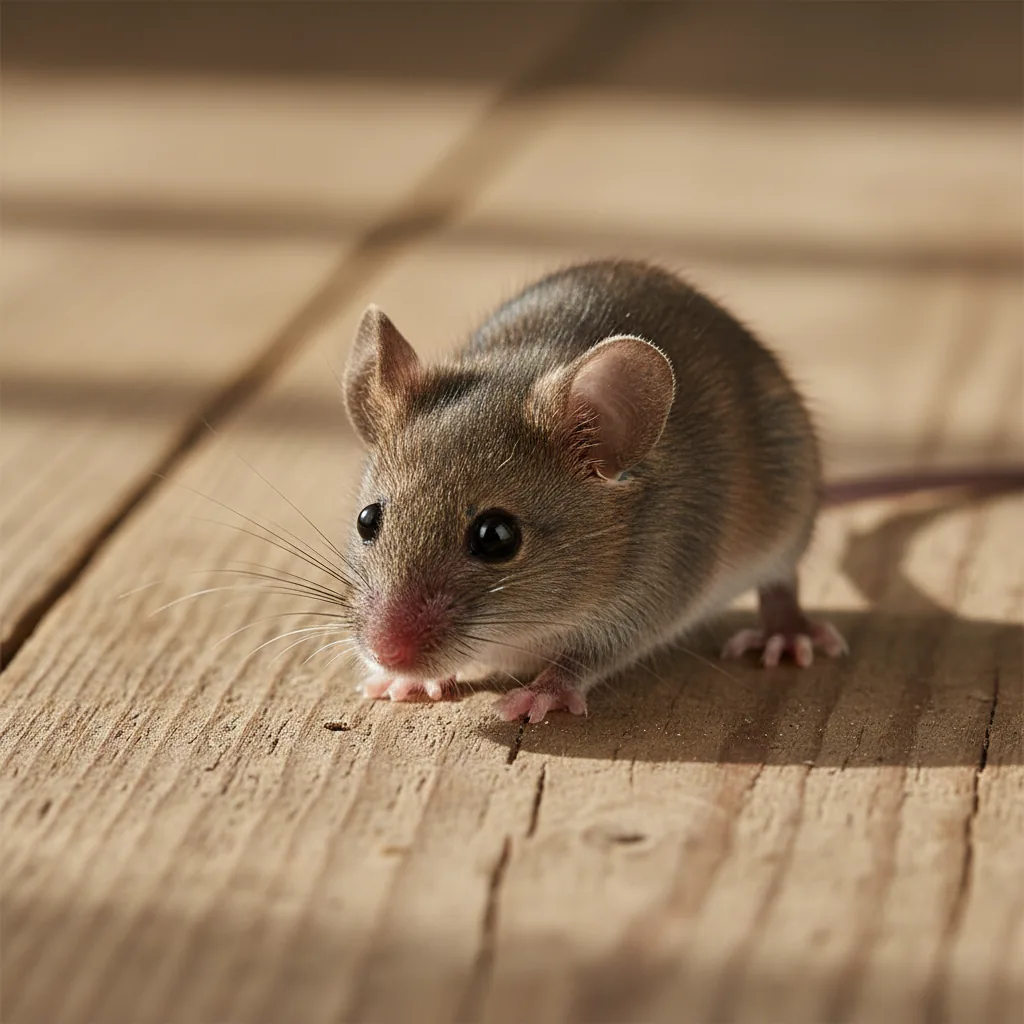
What it looks like
- Small (3-4" body), uniform dusty gray-brown
- Large rounded ears relative to head
- Long thin tail equal to or slightly longer than body, lightly haired
- Pointed snout with prominent whiskers
Where you'll find it
- Wall voids, attics, drop ceilings, and behind appliances
- Pantries, cabinets, and food storage areas
- Garages, basements, and crawl spaces
- Under stoves and refrigerators (warm motors)
Behavior & biology
House mice are commensal — they live with humans and rarely survive long outdoors. A female can produce 35–60 offspring per year. They squeeze through openings as small as 1/4" (a dime). Diet is grains, seeds, and pet food, but they'll eat almost anything. They're poor swimmers but excellent climbers and jumpers. Mice mark territory with urine droplets and pheromones, attracting more mice.
Iowa activity calendar
Peak Iowa activity months
Iowa house mouse infestations spike October through March as outdoor populations push indoors for warmth. By late September, exclusion work pays for itself many times over.
Signs of an infestation
- Small dark droppings (rice-grain shaped, ~1/8" long)
- Gnaw marks on food packaging, cardboard, and wood trim
- Scratching or scurrying sounds in walls/ceilings at night
- Musky urine smell in cabinets and pantries
- Greasy 'rub marks' along walls where mice travel repeatedly
Health & property risk
House mice contaminate far more food than they eat — droppings, urine, and hair contaminate stored food and food contact surfaces. They carry Salmonella, hantavirus (rare), and LCMV. They chew electrical wiring, causing fire risk. Their droppings and dander trigger asthma.
How we treat it
- 1
Inspection — inside + outside
We inspect every level of the home plus exterior foundation, utility penetrations, and roofline. Most homes have 4–10 entry points the homeowner doesn't know about.
- 2
Snap traps inside + bait stations outside
Snap traps placed where mice actually travel (not where you've seen them) for clean indoor removal. Tamper-resistant exterior bait stations control the outdoor population pressure.
- 3
Exclusion — the part DIY skips
We seal gaps with steel mesh, copper wool, sheet metal, and concrete. A 1/4" gap lets a mouse in. This is the only step that actually solves the problem long-term.
- 4
Sanitation + storage guidance
We tell you what to clean and what to leave alone (cleaning droppings without sealing entries can spread disease). Food in sealed containers, pet food in metal bins.
Why DIY usually fails
Snap traps catch a few mice but never address why they got in. Bait blocks tossed in attics poison rodents that then die in your walls — and the smell can last weeks. Without exclusion, you'll be re-trapping forever.
FAQ
Related pests
Ready to get rid of house mouse?
See our service & pricing page for house mouse.
See House Mouse Service →See house mouse in your Iowa home?
Free quote, same-day service, no contracts.