
Pest Library · Iowa
Wasps & Hornets
Vespidae family
Paper wasps, bald-faced hornets, and yellow jackets — the three Iowa stingers.
- Size
- 1/2" – 1.5"
- Color
- Yellow/black, white/black, or reddish-brown depending on species
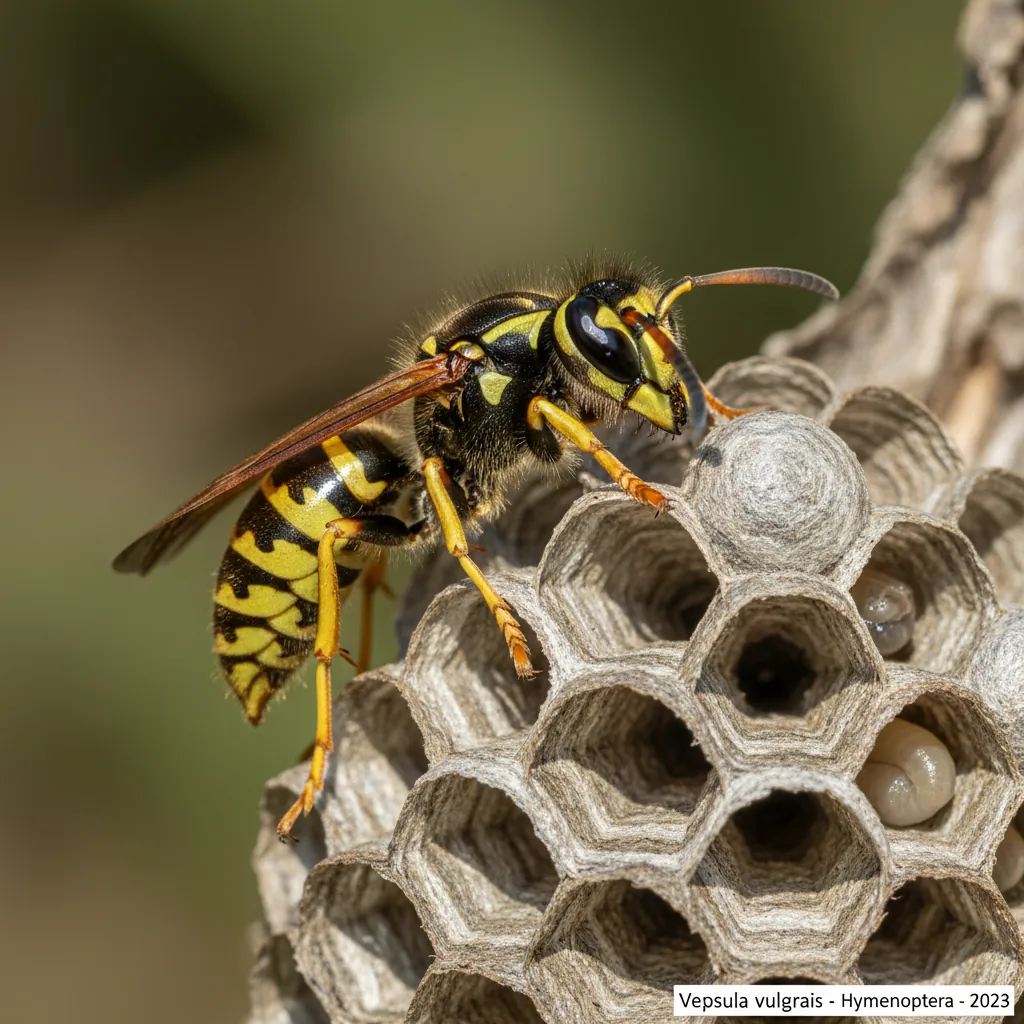
What it looks like
- Paper wasp: long-legged, slender, yellow/brown, builds open umbrella-shaped nests under eaves
- Bald-faced hornet: large (3/4-1"), black with white face, builds gray football-shaped enclosed nests in trees and shrubs
- Yellow jacket: smaller (1/2"), bright yellow/black bands, nests in the ground, in wall voids, or in old rodent burrows
- European hornet (rare in IA): large reddish-brown
Where you'll find it
- Paper wasp: under eaves, in attics, behind shutters, in mailboxes
- Bald-faced hornet: hanging in tree branches, on shed walls, under overhangs
- Yellow jacket: ground burrows in lawns, wall voids, attic insulation, compost piles
- All species forage at fruit, sugary drinks, and protein in late summer
Behavior & biology
Social wasps build annual colonies — a single overwintered queen starts a nest in spring and the colony grows through summer to peak size in August-September (yellow jackets can have 5,000+ workers). Workers and queens die in fall; only newly mated queens overwinter. They're protein hunters early in the season and become aggressive sugar scavengers in late summer when their natural food sources dwindle. Yellow jackets are the most aggressive and the most likely to sting unprovoked.
Iowa activity calendar
Peak Iowa activity months
Iowa wasp activity builds May through August and peaks September-October when colonies are largest and most aggressive. By late October most workers die off.
Signs of an infestation
- Visible umbrella nest under eave (paper wasp)
- Gray football-shaped nest hanging in tree or on shed (bald-faced hornet)
- Wasps flying in/out of a hole in the ground or wall void (yellow jacket)
- Multiple wasps around outdoor eating areas, garbage cans, or hummingbird feeders
Health & property risk
Stings are painful and can be life-threatening for allergic individuals (about 5% of the population). Yellow jackets sting repeatedly when defending a ground nest and account for most wasp-related ER visits in Iowa. Anaphylaxis requires immediate medical attention.
How we treat it
- 1
Identify nest type and location
Different nests need different approaches. Ground nests, void nests, and aerial nests each have specific protocols.
- 2
Direct nest treatment
We treat at dusk or dawn when most wasps are in the nest. Aerosol or dust insecticide applied directly to the nest entrance kills returning workers and the queen.
- 3
Nest removal (when safe)
After the colony is dead (24-48 hours), we remove the nest physically to prevent secondary pest infestation.
- 4
Preventive perimeter treatment
Treating common nesting sites (eaves, soffits, deck rails) in spring prevents new colonies from establishing.
Why DIY usually fails
Hardware-store wasp foggers work for visible single nests if used at dusk and from a safe distance. Yellow jacket ground nests and void nests are dangerous DIY targets — leave those to a pro. Never plug a wall void entry — wasps tunnel into living spaces.
FAQ
Related pests
See wasps & hornets in your Iowa home?
Free quote, same-day service, no contracts.