
Pest Library · Iowa
Boxelder Bug
Boisea trivittata
The black-and-orange bug swarming the south side of your house in October.
- Size
- 1/2"
- Color
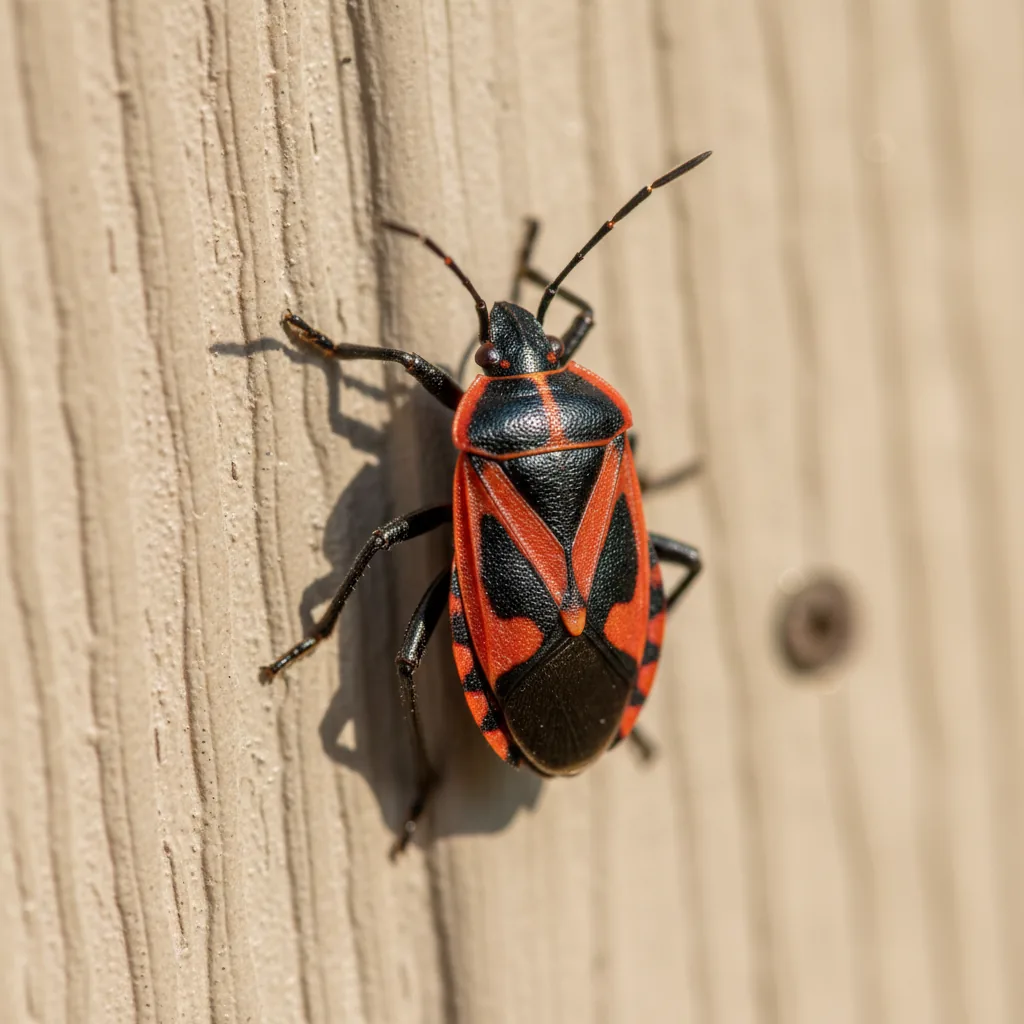
- Black with three bright red-orange stripes on the thorax and red wing edges
What it looks like
- 1/2" long, flat, oval body
- Black with three bright red-orange stripes behind the head and red edges on the wings
- Nymphs are bright red with developing black markings
- Found in massive numbers on warm sunny walls in fall
Where you'll find it
- Female boxelder, ash, and maple trees (where they lay eggs and feed)
- South and west-facing siding, especially light-colored
- Wall voids, attics, and around windows where they overwinter
- Cluster on driveways, foundations, and tree trunks on sunny fall days
Behavior & biology
Boxelder bugs feed on the seeds of female boxelder trees and (less often) ash and maple. They're harmless to people and don't damage homes — but they swarm in huge numbers in fall, gathering on warm sunny walls before slipping into wall voids and attics to overwinter. On warm winter days they wake up and crawl indoors through wall outlets, light fixtures, and window frames. They emerge again in spring.
Iowa activity calendar
Peak Iowa activity months
Iowa boxelder bug swarms peak late September through October. Indoor sightings continue through winter on warm days, with a final emergence in March-April.
Signs of an infestation
- Hundreds to thousands of black-and-orange bugs on south-facing siding in fall
- Indoor sightings on warm winter days, especially around windows
- Reddish stains on light-colored siding and curtains (their droppings)
- Clusters on driveways and tree trunks on sunny fall days
Health & property risk
Harmless to people, pets, and structures. Annoyance only — but a heavy swarm covering the side of a house is unsettling and the staining is real.
How we treat it
- 1
Late summer perimeter treatment
August-September perimeter spray on south and west-facing walls intercepts the fall migration before they cluster. Single best time to treat.
- 2
Cluster spray during swarms
Direct spray on visible clusters drops the population fast. Combined with perimeter for lasting results.
- 3
Seal entry points
We point out gaps around windows, soffits, dryer vents, and utility lines where they slip indoors.
- 4
Vacuum (don't squash) indoor bugs
Squashing leaves a stain. Vacuum and discard the bag outside.
Why DIY usually fails
Knockdown sprays kill the cluster but don't prevent the next wave. Late August perimeter treatment is what cuts fall populations. Caulking entry points pays off year after year.
FAQ
Ready to get rid of boxelder bug?
See our service & pricing page for boxelder bug.
See Boxelder Bug Service →See boxelder bug in your Iowa home?
Free quote, same-day service, no contracts.