
Pest Library · Iowa
Asian Lady Beetle
Harmonia axyridis
The orange 'ladybug' that swarms Iowa homes in October — and bites if it lands on you.
- Size
- 1/4" – 3/8"
- Color
- Orange to red, often with black spots (count varies — could be 0 to 19)
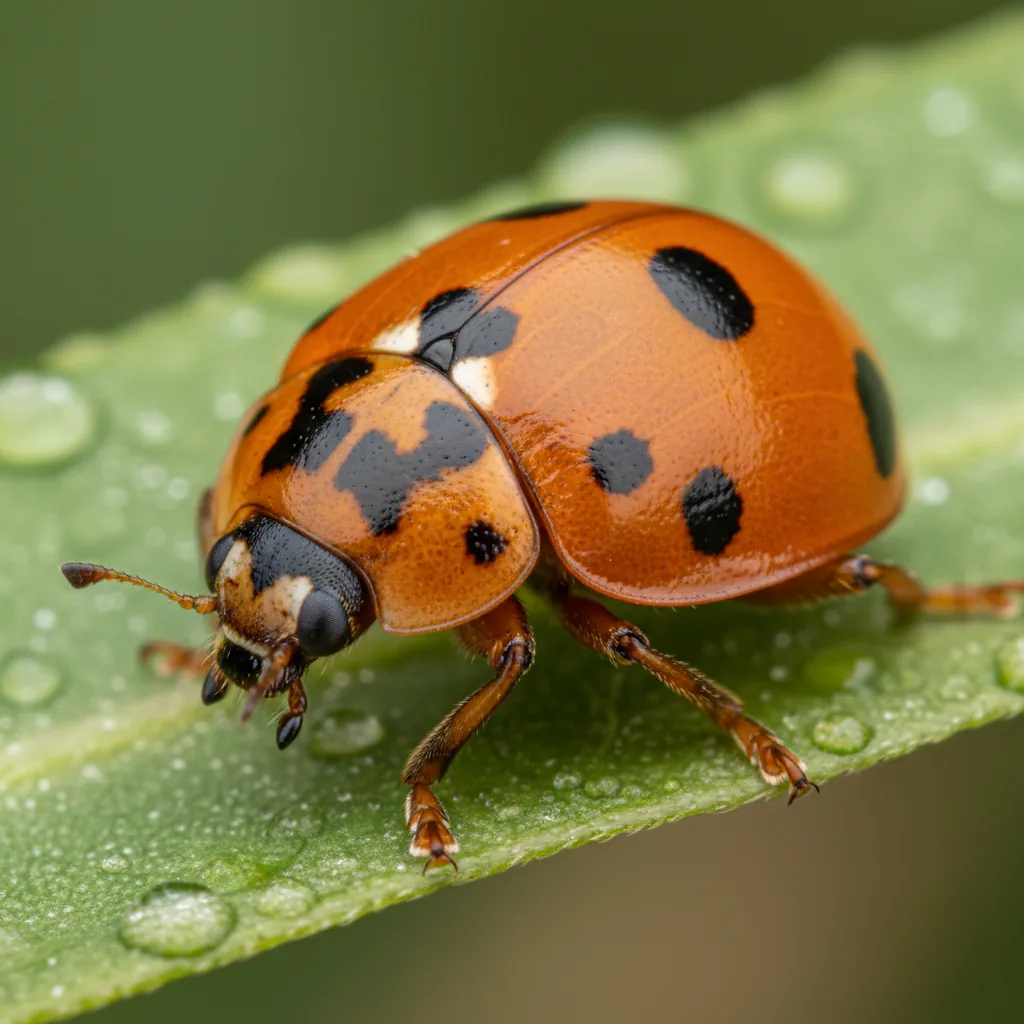
What it looks like
- Larger than native ladybugs (1/4-3/8")
- Variable color: pale orange to deep red
- Distinctive 'M' or 'W' shape on the white pronotum behind the head
- Variable spots — anywhere from 0 to 19
- Native ladybugs are smaller, redder, and lack the M-shape
Where you'll find it
- Lights-colored south and west-facing siding (where they cluster in fall)
- Attics, wall voids, and window frames (overwintering)
- Soybean fields and aphid-infested plants in summer
- Indoor light fixtures and warm window panes on winter days
Behavior & biology
Asian lady beetles were introduced to the US in the 1970s for aphid control in agriculture — they've since spread aggressively. They're useful predators (eat aphids and scale insects) but become severe nuisance pests in fall when they migrate to overwinter inside homes. They release a yellow staining defensive secretion when disturbed (smells unpleasant), and unlike native ladybugs, they will bite humans — a sharp pinch but no medical concern.
Iowa activity calendar
Peak Iowa activity months
Iowa Asian lady beetle swarms peak in October. Indoor activity continues through winter and spikes again in March-April when they exit overwintering sites.
Signs of an infestation
- Orange beetles clustering on south-facing windows and siding
- Yellow stains on walls, curtains, and light surfaces (defensive secretion)
- Beetles inside light fixtures and around windows in winter
- Pinching bites if they land on your skin
Health & property risk
Bites are minor. Yellow staining on walls and fabric is real and hard to remove. Some people are allergic to the secretion. They're a major nuisance pest, not a health threat.
How we treat it
- 1
Late summer exterior treatment
Same approach as boxelder bugs — August-September perimeter treatment on south and west walls intercepts the fall migration. Most effective single intervention.
- 2
Direct spray during clusters
Knockdown of visible clusters during peak swarming reduces the indoor pressure that follows.
- 3
Seal entries
Caulk gaps around windows, soffits, vents, and utility penetrations.
- 4
Vacuum indoor beetles
Use a stocking-fitted vacuum nozzle for living/breathing beetles, then release outside or dispose. Don't crush — yellow stain.
Why DIY usually fails
Caulking entry points and treating south-facing siding in late August are the two most effective DIY steps. Indoor sprays do little against beetles already in wall voids.
FAQ
Related pests
Ready to get rid of asian lady beetle?
See our service & pricing page for asian lady beetle.
See Asian Lady Beetle Service →See asian lady beetle in your Iowa home?
Free quote, same-day service, no contracts.