
Pest Library · Iowa
Centipedes & Millipedes
Class Chilopoda & Diplopoda
The many-legged crawlers in damp Iowa basements and crawl spaces.
- Size
- 1" – 4"
- Color
- Centipedes brown/yellow; millipedes dark brown/black
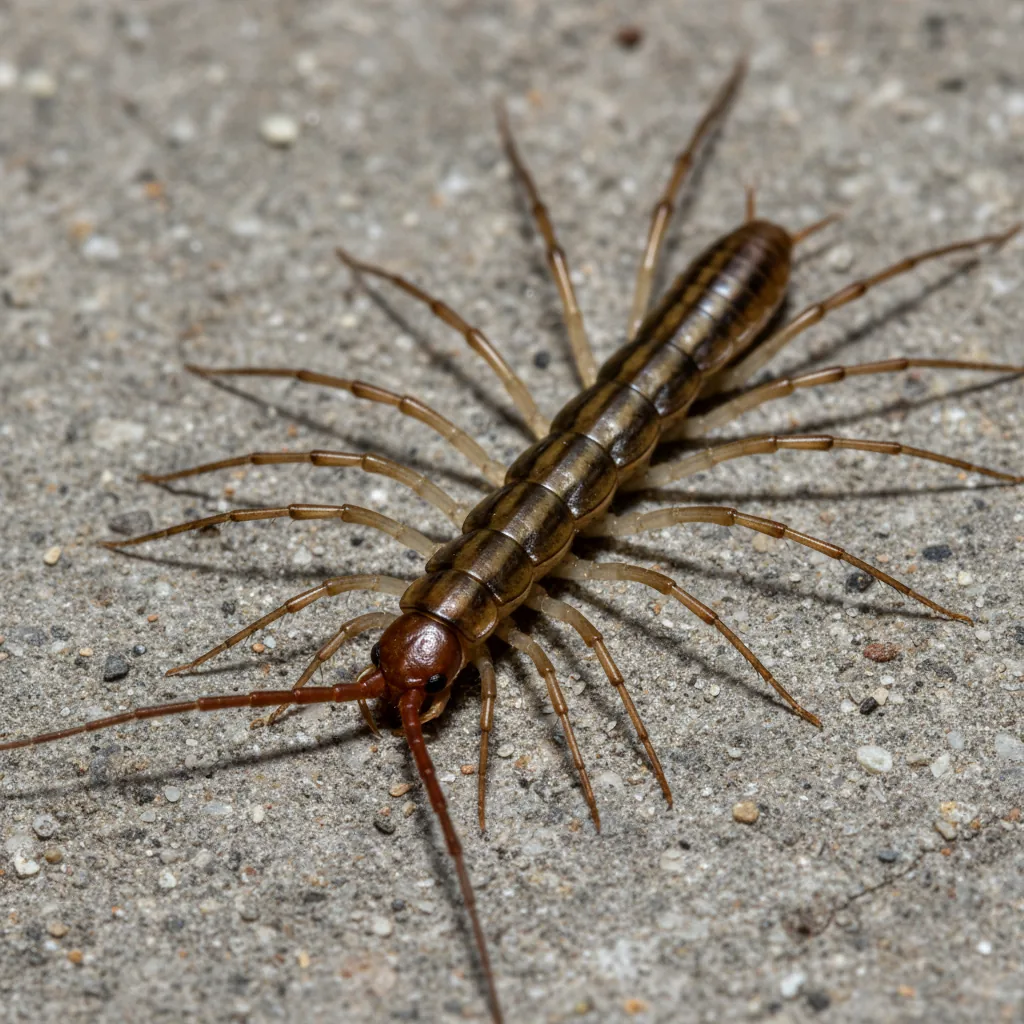
What it looks like
- Centipedes: flattened body, ONE pair of legs per segment, fast movers, large jaws
- Millipedes: cylindrical body, TWO pairs of legs per segment, slow, curls into a coil when disturbed
- House centipede: distinctive long-legged ghost-like appearance
- Both prefer dark damp spaces
Where you'll find it
- Damp basements, crawl spaces, and bathrooms
- Under leaf litter, mulch, and rocks outdoors
- Window wells and around foundations after rain
- Garages and storage rooms
Behavior & biology
Centipedes are predators — they hunt other insects (including silverfish and roaches) at night with venomous jaws. Millipedes are detritivores — they eat decaying plant matter. Both need moisture to survive. Mass millipede invasions happen after heavy rain when outdoor populations get displaced. House centipedes are actually beneficial indoor predators but most homeowners want them gone.
Iowa activity calendar
Peak Iowa activity months
Iowa centipede/millipede indoor sightings peak May-October, with surges after heavy rain.
Signs of an infestation
- Fast long-legged centipedes in basements at night
- Slow curled millipedes in window wells, garages, and around foundations
- Dead millipedes after they wander indoors and dry out
Health & property risk
House centipede bites are uncommon and mild. Millipedes don't bite but secrete a defensive chemical that can stain skin. Neither is medically significant.
How we treat it
- 1
Moisture reduction
Reducing basement and crawl space humidity (dehumidifier, fix leaks) eliminates harborage. The single most effective step.
- 2
Perimeter treatment
Residual insecticide in a 3-ft perimeter band, with focus on mulch beds, foundation plantings, and window wells.
- 3
Indoor cleanup
Vacuum visible centipedes and millipedes; treat baseboards and basement corners with residual.
Why DIY usually fails
Run a basement dehumidifier. Move mulch and leaf litter away from the foundation. Pull stored cardboard and damp items off basement floors.
FAQ
Related pests
See centipedes & millipedes in your Iowa home?
Free quote, same-day service, no contracts.